First in the Chandigarh Tricity. VELYS System, Johnson & Johnson Certified. Dr. Atul Malhotra.
Chandigarh got its first VELYS robotic knee replacement at ARV Orthopaedic Hospital. Dr. Atul Malhotra brought the system here after training in Singapore, where it was already in routine clinical use. If you are looking for the most precise knee replacement available in the Chandigarh tricity today, this is it.
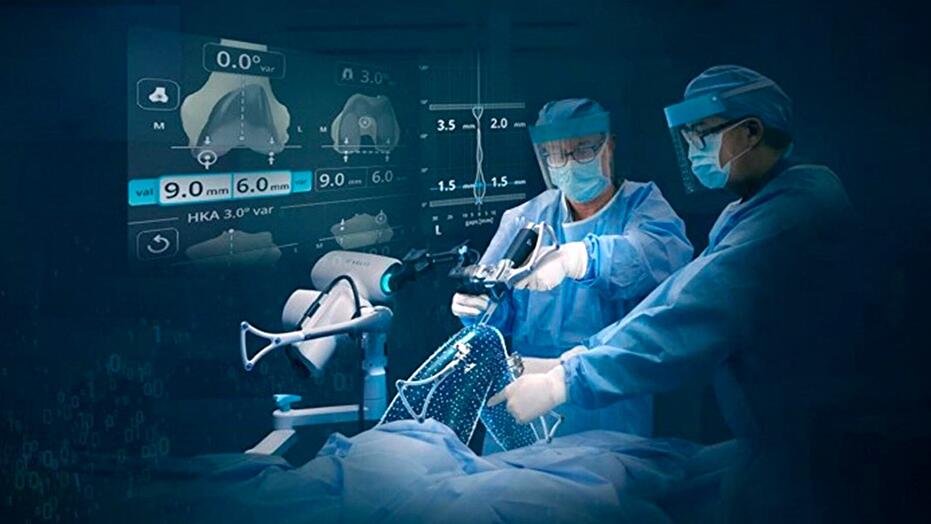
Dr. Malhotra holds the instruments. The VELYS system provides real-time guidance — measuring angles, tracking bone alignment in three dimensions, continuously updating the plan based on how the bone actually responds. The implant lands within 0.5mm of the pre-operative plan. That accuracy is physically impossible with manual instruments alone, no matter how experienced the surgeon.
A knee implant placed even 3mm off-centre can cause years of chronic discomfort, accelerated wear, and sometimes early failure. Placed correctly, within sub-millimetre tolerance, most patients say they stop thinking about the knee altogether.
Step 1 — Pre-operative planning. A CT scan maps your exact bone anatomy before the first incision. The VELYS software creates a 3D model of your knee and calculates the precise implant size and position for your anatomy specifically — not a population average.
Step 2 — Intraoperative guidance. During surgery, optical sensors track bone movement in real time. If the bone shifts even slightly, the system alerts Dr. Malhotra and adjusts. The plan updates live. Every cut is verified before it is made.
Step 3 — Implant placement. The implant is seated with the exact alignment the system planned. No guesswork. The knee is tested through full range of motion before closing.
Robotic replacement is suitable for most patients who need a knee replacement. It is particularly recommended for patients who want the longest possible implant life, patients with unusual anatomy, those who have had previous knee surgeries, and younger patients (under 65) where implant longevity matters most.
The decision starts with a clinical assessment. X-rays, sometimes a CT scan, and a physical examination. Dr. Malhotra will tell you clearly whether you need surgery now, in a year, or whether there are non-surgical options worth trying first.
Day 1 — Standing with physiotherapy support. Exercises begin in the first 24 hours. Early mobilisation reduces clot risk and speeds recovery.
Day 3–4 — Discharged home with a walker and a clear physiotherapy programme.
2–3 weeks — Walking without walker indoors. Outpatient physio continues.
6 weeks — Managing stairs independently. Driving (left knee) possible for most patients.
3–4 months — Full recovery. Return to normal daily activities. Most patients say the new knee feels natural.