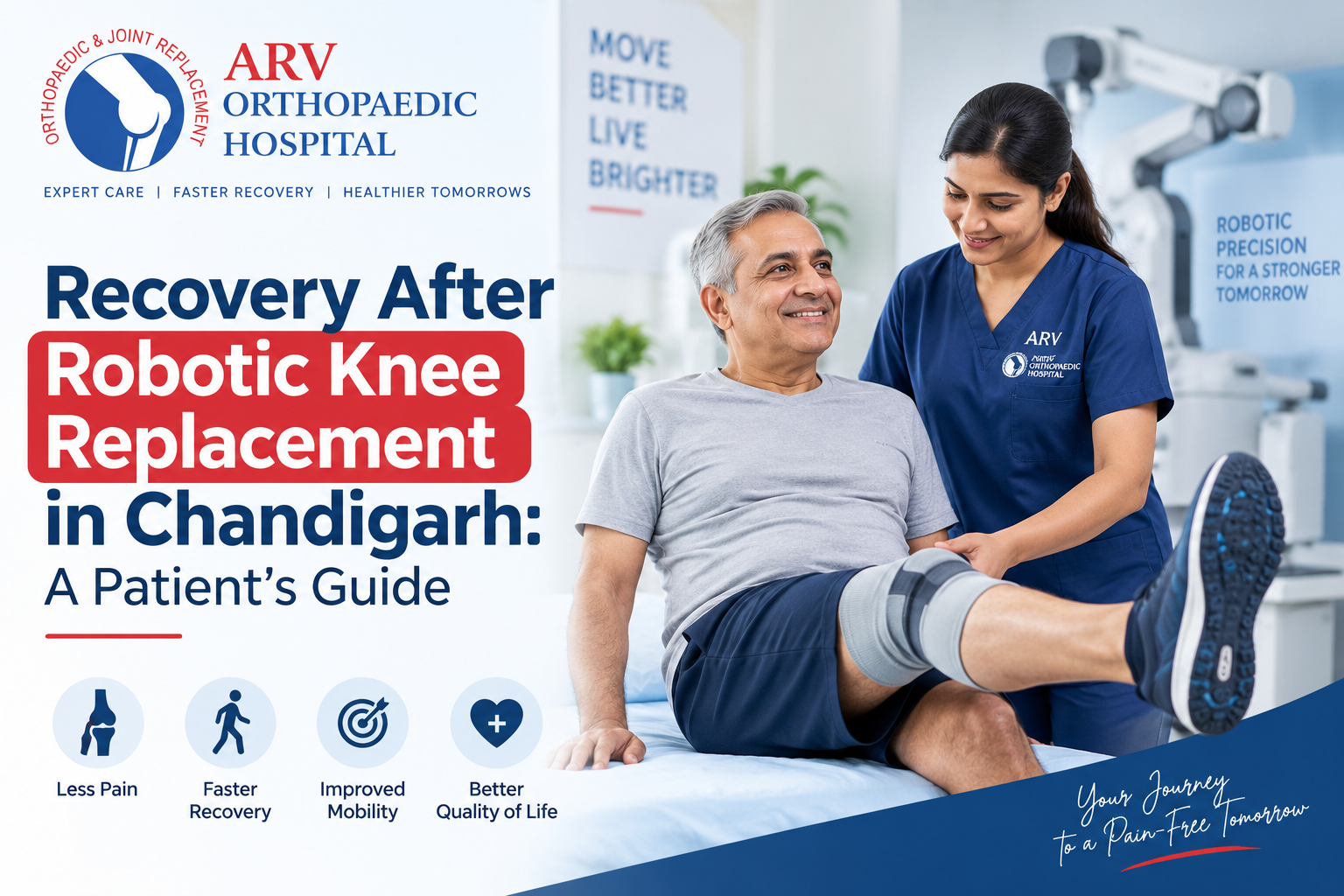
Knee joint pain and stiffness begin to affect a person’s normal activities like walking, going up the stairs, and even sleeping. Unrestricted movement and pain-free lives are what patients with advanced stage knee arthritis and severe joint damage hope to achieve through knee replacement surgery. Robotic knee replacement in Chandigarh brings together surgical technology with the expertise of veteran Orthopaedic surgeons to help plan and accurately position the implants.
However, surgery is not the end of treatment. Proper recovery and rehabilitation are equally important in gaining a good functional return. The following is a general outline of what patients can expect following robotic knee replacement surgery.
Immediate Post-Op
Following the surgery, members of the surgical team evaluate your pain, swelling, wound, and your general condition on a regular basis. During post-surgery recovery, it is recommended to begin moving the leg as soon as you are able.
In addition, a physiotherapist will perform a few easy to perform circulation, knee movement, and muscle strengthening exercises. Depending on your surgeon’s preference and your individual condition, assisted walking will start relatively quickly.
Pain management post-operatively is essential. Take your pain medications as prescribed and inform your team if you begin to experience unusual or worsening symptoms.
The First Month
The first month entails increasing mobility and knee joint function with the help of various physiotherapy techniques. The focus during this time is on regaining balance and improving flexibility and muscle strength.
Those who require a walker or crutches before surgery will begin using them early on. Progress after surgery strengthens the knee and decreases assistance over time.
Regularly doing rehabilitation exercises on your own is important. That being said, to help avoid overdoing it, don’t push yourself beyond recommended restrictions. Everyone heals differently, so your rehabilitation will need to be catered to your personal progress.
On Managing Swelling and Discomfort
After knee replacement surgery, some patients experience swelling and discomfort. There are recommended protocols for rest, elevation, medication, and physical therapy by your surgeon. You should follow these.
You should be aware of suddenly increasing swelling, severe pain, change in drainage, redness, and fever. If you experience any of the symptoms that are concerning, you should call your doctors.
On Everyday Activities After Recovery
Recovery from this surgery is gradual. Thankfully, a large portion of activities that people spend their day on can be resumed when recovery begins.
Your surgeon and physical therapist will advise you on resuming your former activities of driving, work, and exercise. It is a good idea to avoid comparing your surgery recovery to other people’s recovery, because your overall health and condition, age, muscle strength, surgical findings and rehabilitation will likely be different.
On Importance of Follow-Up Appointments
Your orthopedic team will examine healing, check knee movement, test strength and assess progress during scheduled follow-up visits. They will also examine you for stiffness, pain, and swelling, and check your progress on rehabilitation.
When researching Robotic Knee Replacement surgery in Chandigarh, patients must analyze the orthopaedic surgeon’s plan for the surgery in its entirety in terms of the steps involved in preparation, surgery, rehabilitation, anticipated recovery time, and the surgery related risks.
An orthopaedic surgeon will evaluate hip related problems as well. If you are searching for the best hip surgeon in Chandigarh, you must consider several other factors in addition to the ranking of the surgeons on the internet; qualifications, experience, treatment approach of the surgeon, hospital and surgery related facilities, and patient specific recommendations.
Tips for a Smooth Recovery
For a successful, efficient recovery from surgery you must follow all of your surgeon’s instructions regarding your medication and physiotherapy. Maintain consistency with all of the exercises that your surgeon recommends. Use all of the aids for support and balance that your health care providers advise. Protect your surgical wound by all of the instructions for wound care that your health care providers advise. Follow all of the scheduled appointments and attend all of your post-surgery recovery check-ups.
Conclusion
Until your doctor tells you it is safe to do so, avoid all high impact activities. While recovery from knee replacement surgery is a long process that requires patience and regular medical support, the surgical planning and robotic technology used in Chandigarh help surgeons prepare for knee replacement surgery. Successful rehabilitation and patient participation is essential in the recovery process.
After knee replacement surgery, with appropriate post operative care, continuous physiotherapy for recovery, rehabilitation, and a commitment to lifestyle modification as suggested by your surgeon, many patients are able to return to their daily living activities and normal routines with improved mobility.
Contact ARV Hospital
ARV Orthopaedic Hospital
Address: #2125, Sarovar Path, Sector 21C, Chandigarh, 160022
Open: 24×7 hrs
Phone: 0172 400 5596, 271 1978, 8427452125
Email: dratulmalhotra.23@gmail.com
Connect With Us
Facebook: https://www.facebook.com/ARVHospital